GLOBAL HEALTHY
FOOD FESTIVAL 2026
Language selection ↗

A1 / Korea

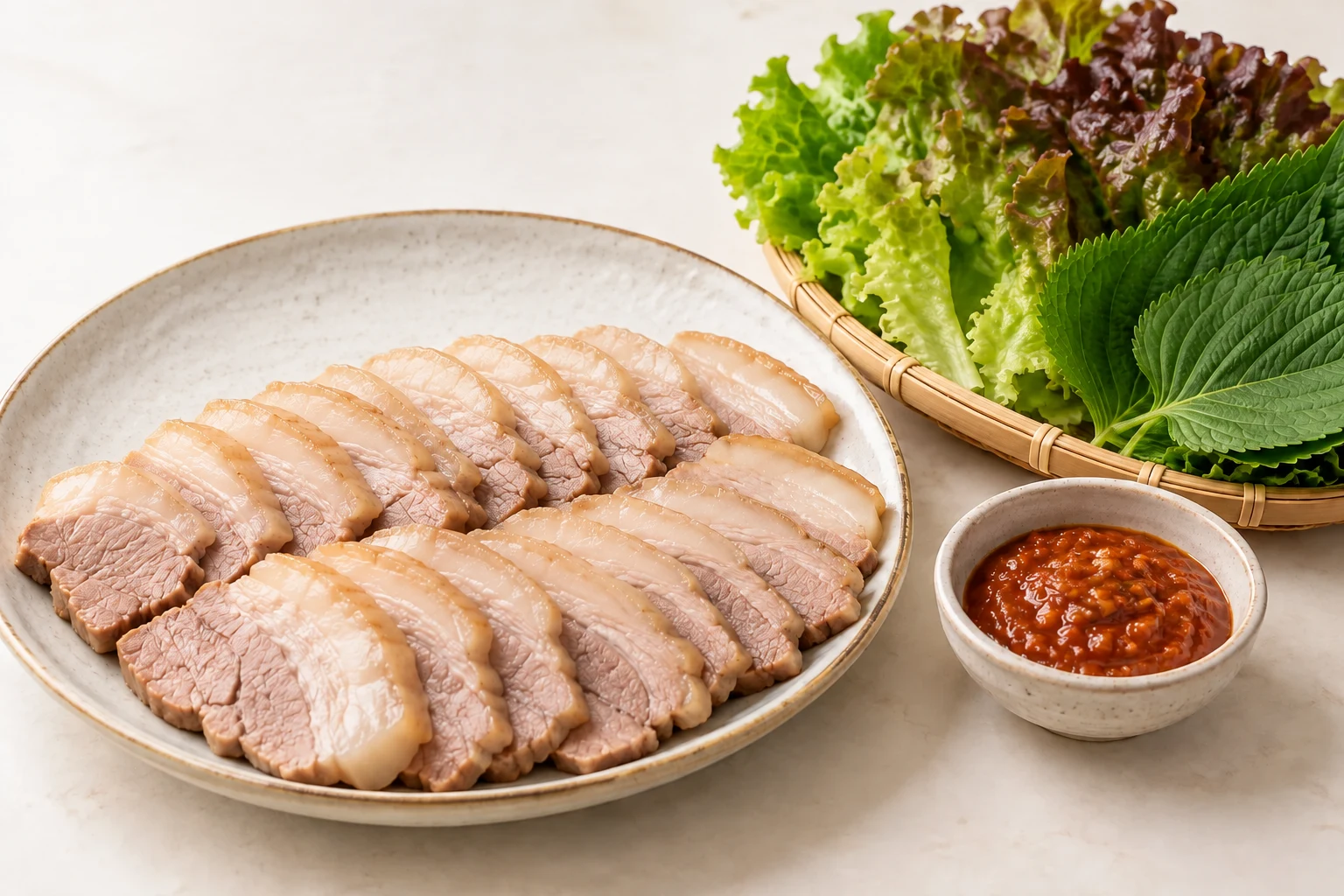
Boiled pork and ssamjang

Boiled pork and ssamjang
Food images are examples and may differ from the actual serving.

Stories from tables around the world

This is a Korean dish served with ssamjang, a savory sauce made with the rich flavor of fermented soybeans, alongside simply boiled pork (suyuk).

Origin and food culture

Ssamjang is a seasoned paste based on doenjang. It has long been enjoyed with Korea’s ssam culture, where rice or meat is wrapped in vegetables. Doenjang is one of Korea’s fermented soybean pastes, and ssamjang is made by adding various seasonings to it. Because each home and restaurant uses different levels of spiciness, sweetness, and mix-ins, ssamjang with the same name can taste different.

What is it usually eaten with?

Suyuk is sometimes eaten with ssam vegetables, garlic, and kimchi, and ssamjang adds flavor to ssam eaten with vegetables or rice. These are general pairing examples. Wrapping rice, meat, and paste together in lettuce or perilla leaves is also a familiar way to eat. What is actually being served today is suyuk and ssamjang, so we have separated these usual pairings from the festival offering.

Today’s served menu

Boiled pork and ssamjang

Today we are serving suyuk and ssamjang. Additional sides such as ssam vegetables and kimchi are not currently confirmed as part of the menu.

Basic composition · Check the actual product first

Suyuk (pork) and doenjang-based ssamjang. The exact blend of the ssamjang has not yet been checked against the on-site product.

Allergy and ingredient check

Ingredients to check in the menu name and basic sample recipe

  • pork pork

Items to check additionally in the product and sauce

  • soybeans soy
  • wheat wheat
  • sesame sesame
  • shrimp shrimp
  • fish fish

Please check the actual ingredients in the ssamjang and seasonings. You should also confirm whether shrimp or fish ingredients were used, and whether the same cooking tools are shared.

If you have an allergy, please ask the booth staff to confirm the full ingredients list and product labels before tasting. If you cannot confirm cross-contact from the actual product, sauce, or shared utensils, please do not taste it.

Country

Korea

Korea
Reference materials on food cultureKorea.net · Korean jang and ssamjang ↗